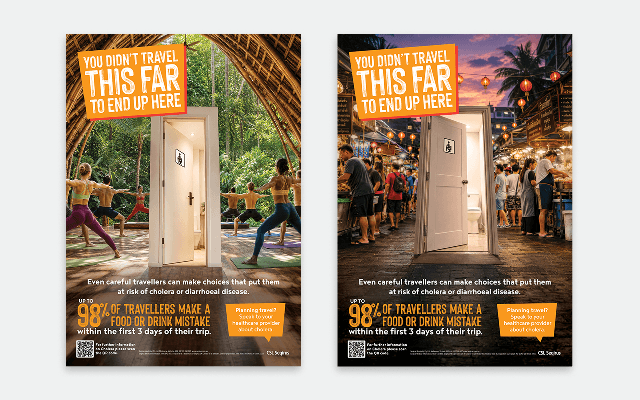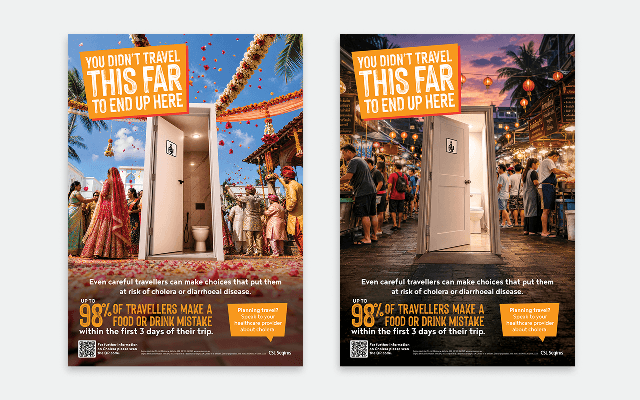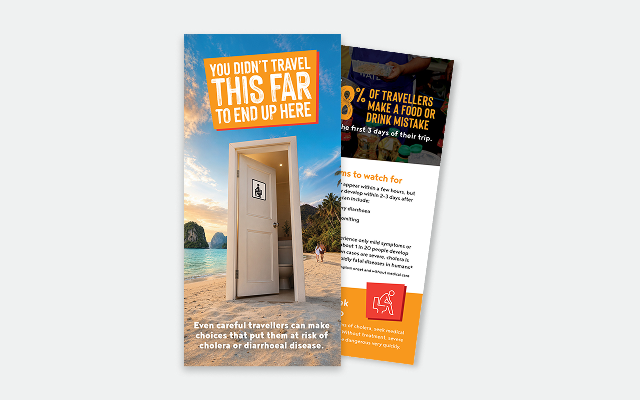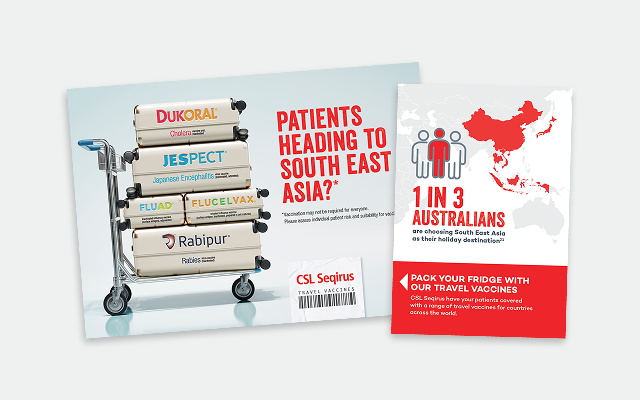
They didn't travel this far to end up here
98% of travellers make a food or drink mistake within the first 3 days of their trip.1
98% of travellers make a food or drink mistake within the first 3 days of their trip.1
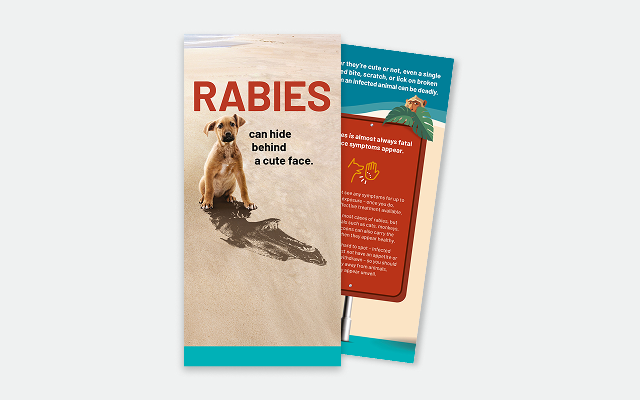
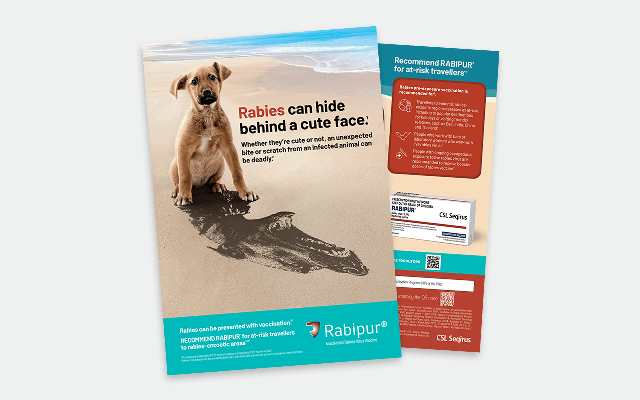
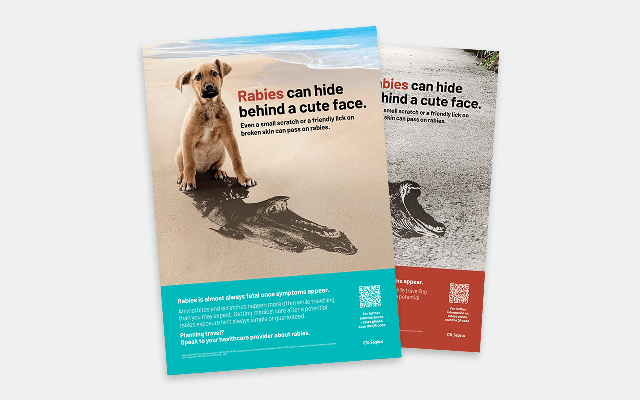
Whether they’re cute or not, an unexpected bite or scratch from an infected animal can be deadly.3

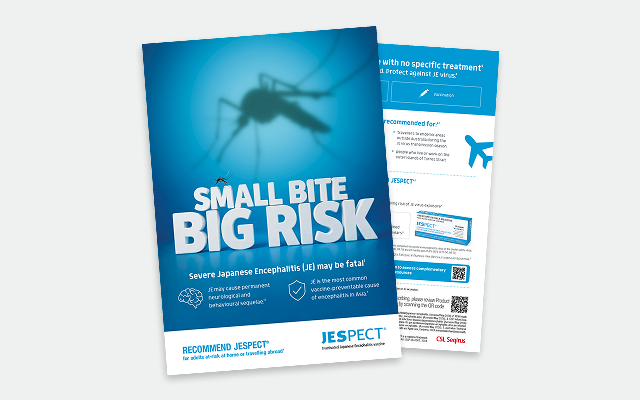
Japanese Encephalitis (JE) is a serious disease with no specific treatment.4




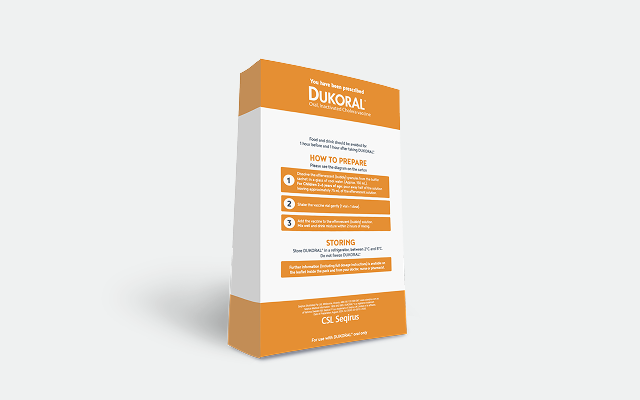
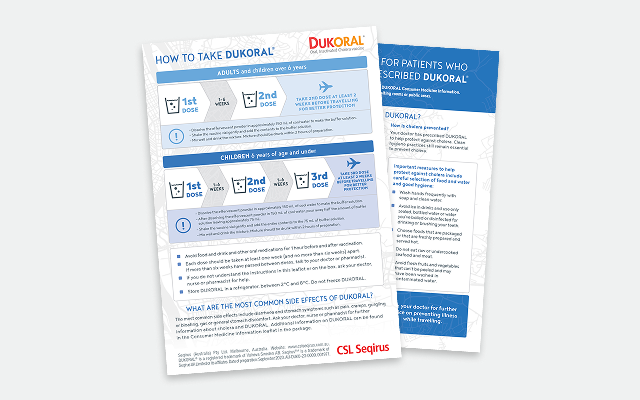
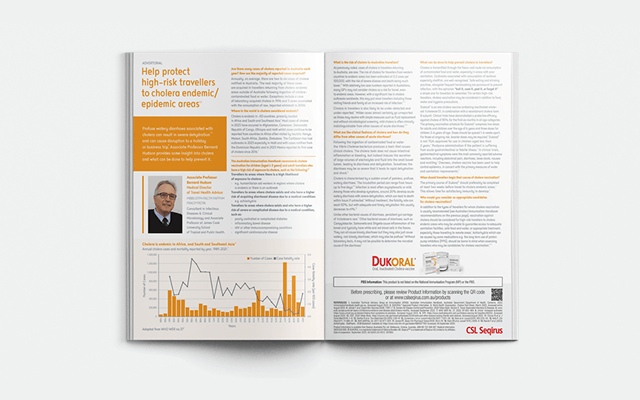
Adults and children ≥2 years of age who are at high-risk of cholera.6 Postpone administration of DUKORAL® in people suffering from acute gastrointestinal or febrile illnesses.6
Can be administered together with yellow fever vaccines. Separate encapsulated oral typhoid vaccine and DUKORAL® by at least 8 hours. Avoid food and drink or other oral medicines for 1 hour before or after vaccination.6
Satisfactory protection can be expected at 2 weeks after last dose in primary course.6
At 6 months after primary course, DUKORAL® demonstrated 85% protective efficacy against cholera.6
In clinical trials, gastrointestinal symptoms were the most commonly reported adverse reactions in both vaccine and placebo groups.6
For active immunisation against rabies virus including:
a) Pre-exposure immunisation,
b) Post-exposure treatment following exposure to rabies virus.7
Recommended dosages, as outlined below, are the same for children, adolescents and adults.
Dosage
Pre-exposure Prophylaxis
Primary immunisation
In previously unvaccinated persons, an initial course of pre-exposure prophylaxis consists of three doses (each of 1.0 mL) administered on days 0, 7 and 21 or 28.
Booster doses
In persons with ongoing risk of exposure to rabies virus, the following general guidance is provided:
RABIPUR® may be used for booster vaccination after prior immunisation with human diploidcell rabies vaccine.7
Further information can be found in The Australian Immunisation Handbook
Post-exposure immunisation should begin as soon as possible after exposure and should be accompanied by local measures to the site of inoculation so as to reduce the risk of infection.7
See RABIPUR® Product Information for details regarding post-exposure treatment schedules.
Further information can be found in The Australian Immunisation Handbook
Further information can be found in The Australian Immunisation Handbook
The most commonly occurring adverse reactions are injection-site reactions, such as injection-site erythema, induration and pain; flu-like symptoms, such as asthenia, fatigue, fever, headache, myalgia and malaise; arthralgia, dizziness, lymphadenopathy, nausea, and rash.
A patient’s risk of acquiring rabies must be carefully considered before deciding to discontinue vaccination.7
Rabies vaccines can be co-administered with other vaccines, using separate injection sites.7,8
JESPECT® is an inactivated vaccine suitable for adults (18 years and above) who require immunisation against Japanese Encephalitis.5 Check the Australian Immunisation Handbook for further information.9
Two doses at day 0 and day 28, completed at least one week prior to travel.5
~82% of subjects remained seroconverted 2 years after the first vaccination. Antibody persistence was assessed in an uncontrolled Phase 3 follow-up clinical trial of subjects who completed the pivotal immunogenicity study or the pivotal safety study, and who received at least one dose of JESPECT®. Seroconversion at 24 months was 81.8% (95% CI:75.50, 86.71).5
No. In some cases JESPECT® may be funded through state health departments. Refer to state/territory health department for further details.
Most commonly reported adverse reactions in trials were headache and myalgia.5
Abbreviations: HCP, Healthcare Professionals